
Klaviyo Advanced Analytics - The Sauce
Have you noticed that eCommerce is really full of three-letter words?
e.g. CLV, RFM, CDP, ROI, CAC, SKU, AOV, UTM, CTR, CPC, CRO, LTV, KPI, POS.
I'm sure I missed a few, which kind of drives the point. Let me know if any others deserve a mention.
Today I wanted to talk about two of my favourites on that list: RFM (Recency, Frequency, Monetary value) and CLV (Customer Lifetime Value).
I promise this is not a snooze fest, and it's packed with actionable steps and real examples. Let's dive in.
Preface
Klaviyo is not the only tool you can use to run these analyses for your brand, and it is not the most affordable option out there.
However, Klaviyo has made it relatively easy for eCommerce managers to run the relevant analyses and act on them quickly. Chances are you're already using Klaviyo and already have solid segmentation and automation in place.
We have taken Advanced Analytics for a spin and really like what we see. Before we begin, though: Klaviyo Advanced Analytics isn't for everyone.
Who it's not for:
- Brands with fewer than 100k profiles.
- Brands that don't have their basic flows under control and running efficiently. Don't try to run before you walk.
- Brands generating less than $2M ARR. Pricing starts at $500/month for 100k profiles.
Who it is for:
- Brands with over 100k profiles, ideally 150–200k+. The larger the list, the larger the impact tends to be.
- Brands that are proud of their systems within email and are looking to unlock further growth.
- Brands generating at least $2M in ARR.
What are RFM segments and how do you build them in Klaviyo?
Recency, Frequency and Monetary value are fairly self-explanatory. By using data on how often, how recently and how much your customers purchase, and weighting a score for each, you can identify important customer cohorts and target them with the right messaging.
In Klaviyo, these cohorts are called:
- Champions: purchased recently, often, and spend the most.
- Loyal: purchased often or recently, and spend a good amount.
- Recent: purchased recently, but not frequently.
- Needs attention: frequent customers who haven't purchased for some time.
- At risk: frequent customers who spent a low or average amount but haven't purchased for some time.
- Inactive: customers who don't purchase frequently and haven't purchased in a long time.
- Never purchased: customers with no purchases.
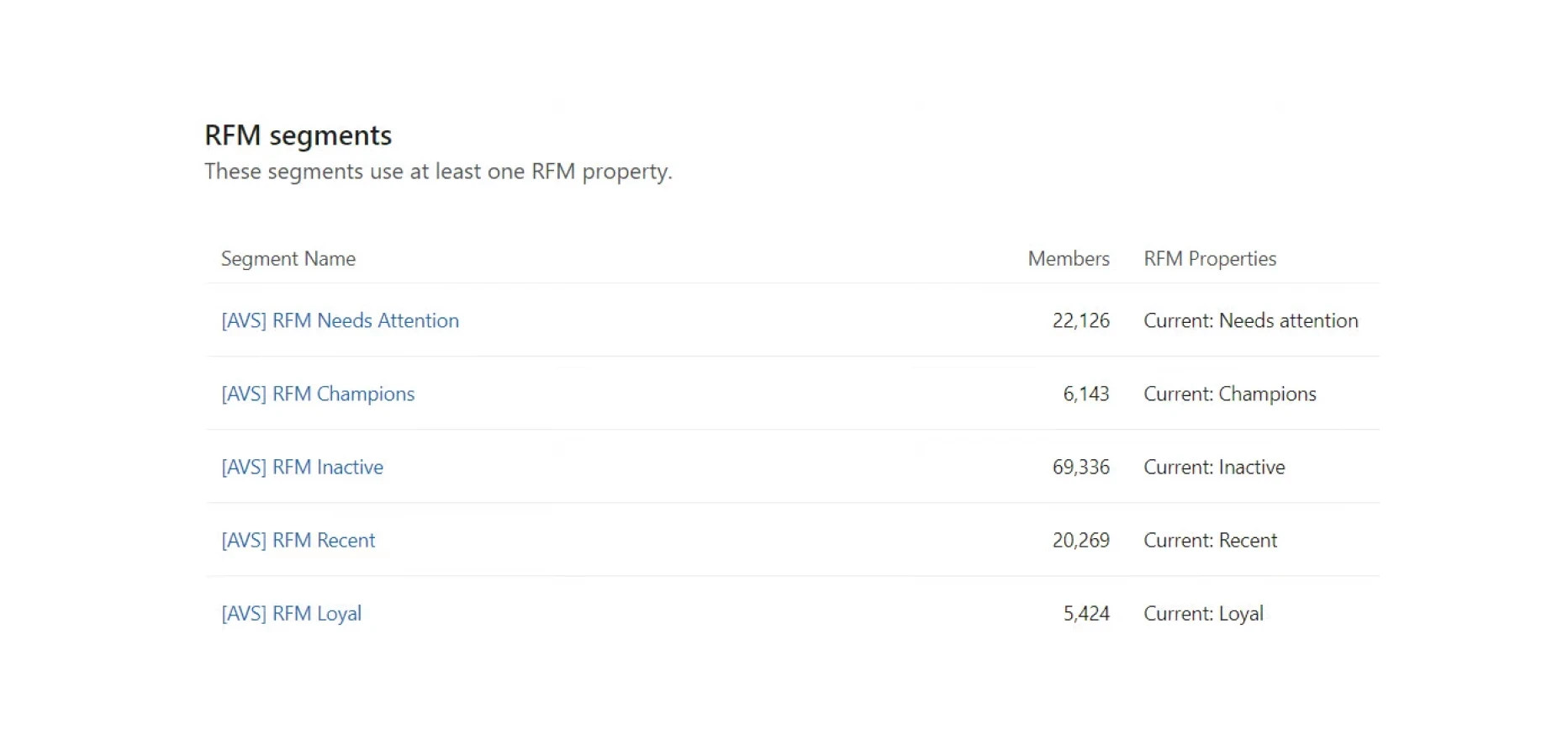
Creating them is easy. Choose "Properties about someone" when building a segment and pick the RFM segment you want. Klaviyo detects and populates these automatically, the same as any other segment.
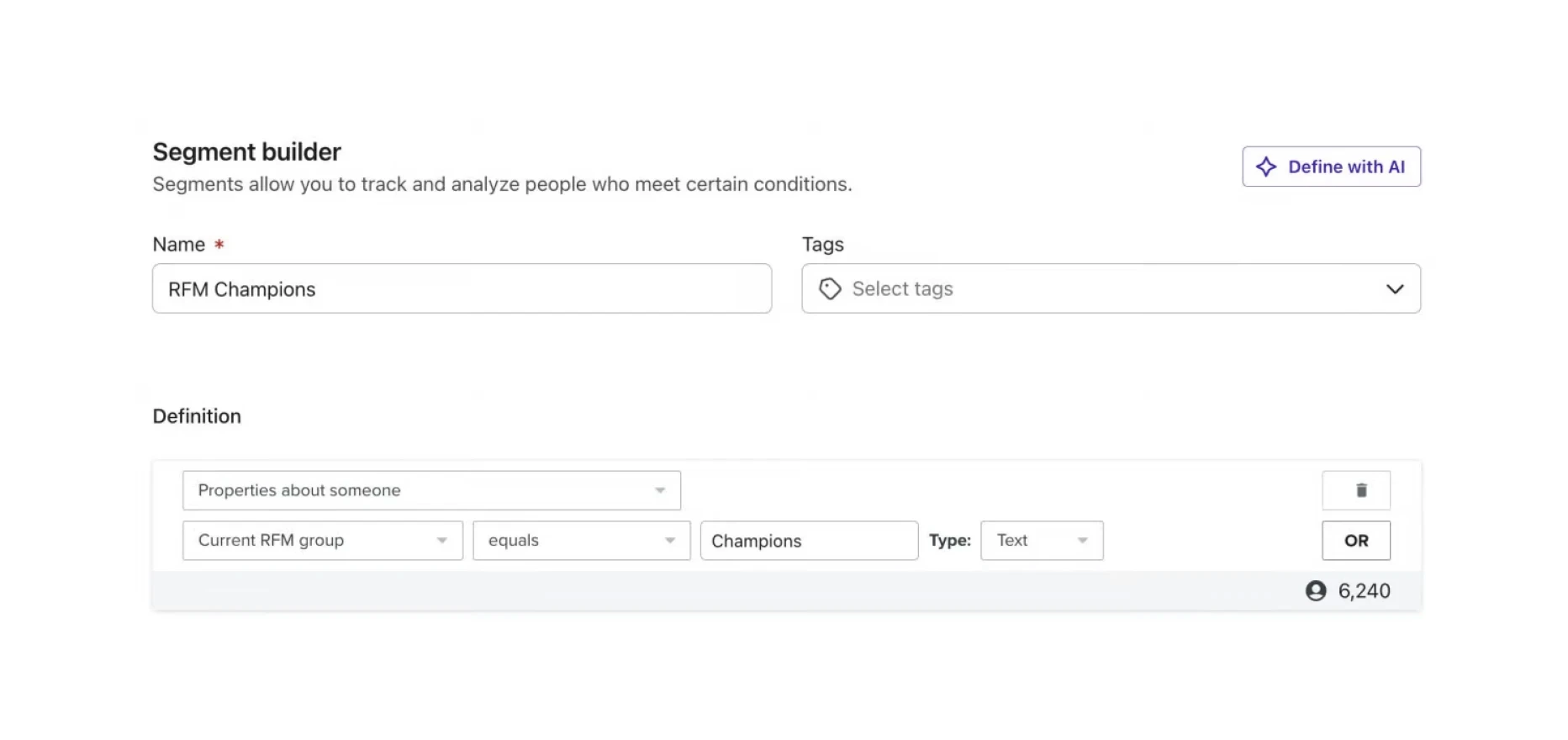
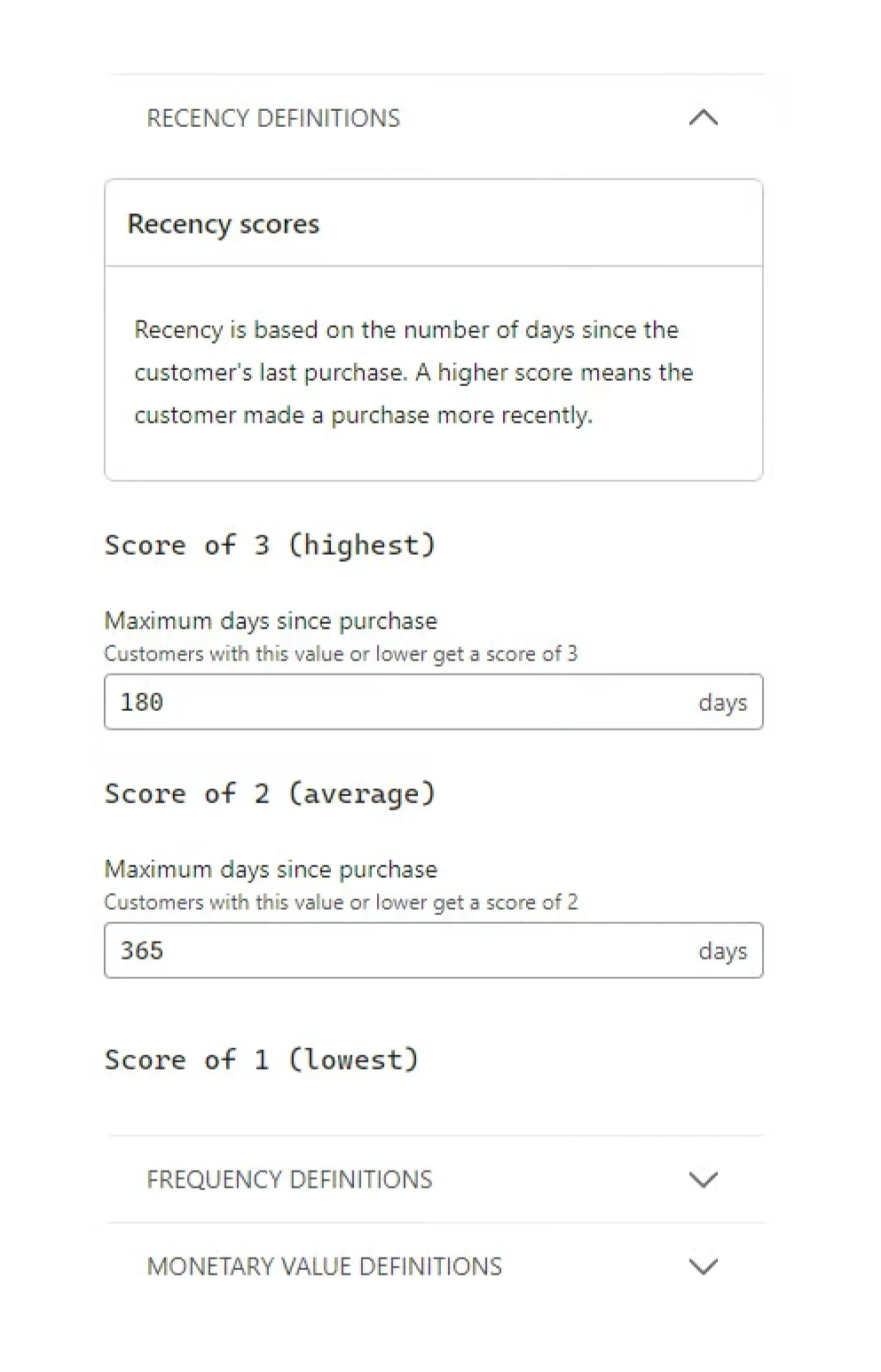
Tip: every business is different, and RFM weighting will vary a lot between business types. A supplement brand with a frequent repeat purchase rate wants a much lower "Maximum days since purchase" than a furniture brand. Configure these numbers around your own vertical and model.
You can do this under "Predictive models" using the "Customize" button.
Now that your RFM segments exist, let's get to the fun part and look at how to use them to drive incremental revenue and repeat purchase rates.
RFM flows that will blow your socks off 🧦
There are plenty of ways to use RFM segments. I'll outline a few and let your imagination handle the rest.
Automate messages when a valued customer becomes at risk
Let's say you've identified that many of your "Champion" customers are at risk of going inactive.
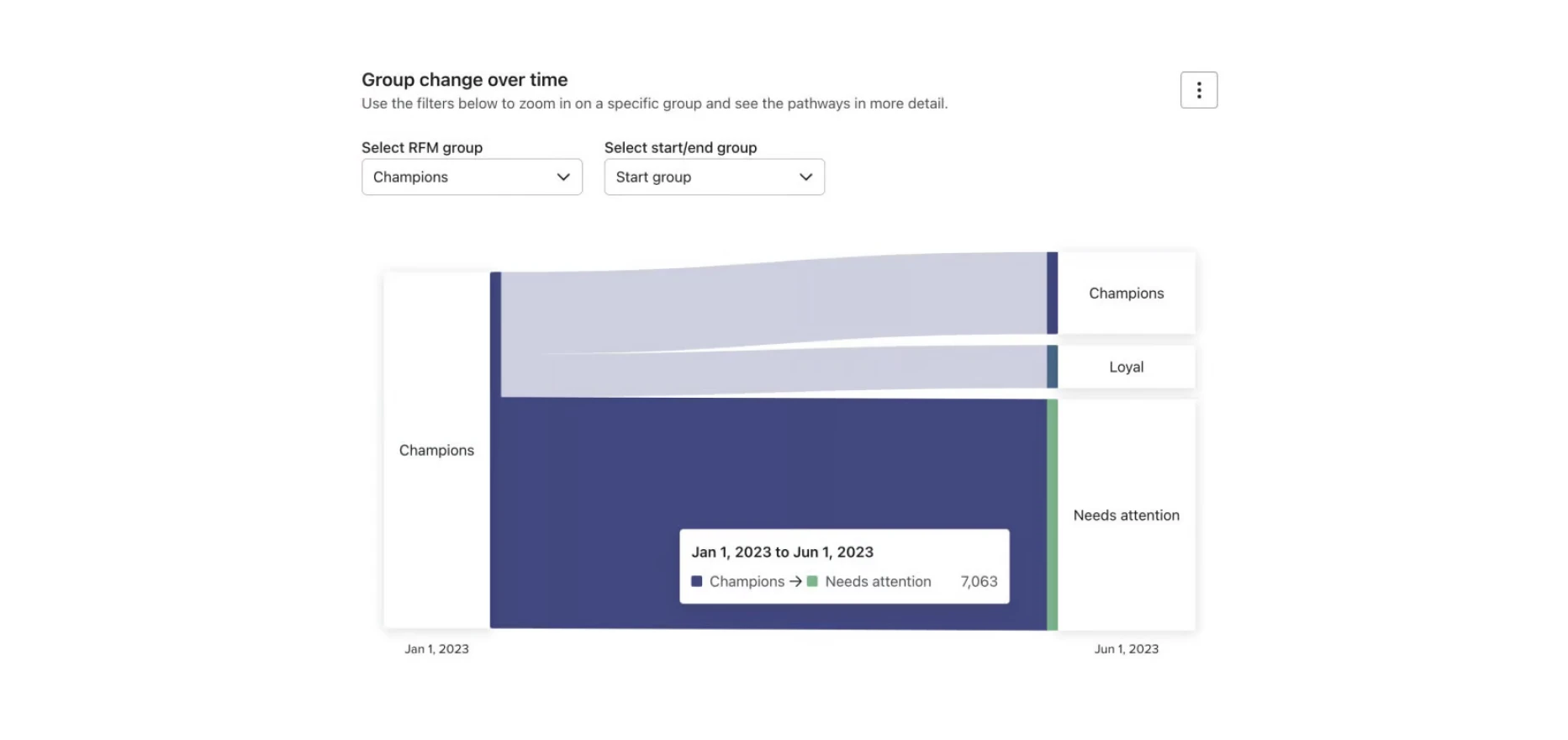
Create a date-triggered flow with profile filters that enters "Champion" customers into a multi-step nurture when they move to "Needs attention" or "At risk".
Recommendation: offer something meaningful — a higher discount, early product access, BOGO — to incentivise a repeat purchase from a formerly high-value customer. Because you know these customers' LTV, you can justify a higher-than-usual incentive to keep them.
Retain loyal customers when they become a churn risk
Let's say your "Loyal" customers have been moving disproportionately into "Needs attention" over the past six months.
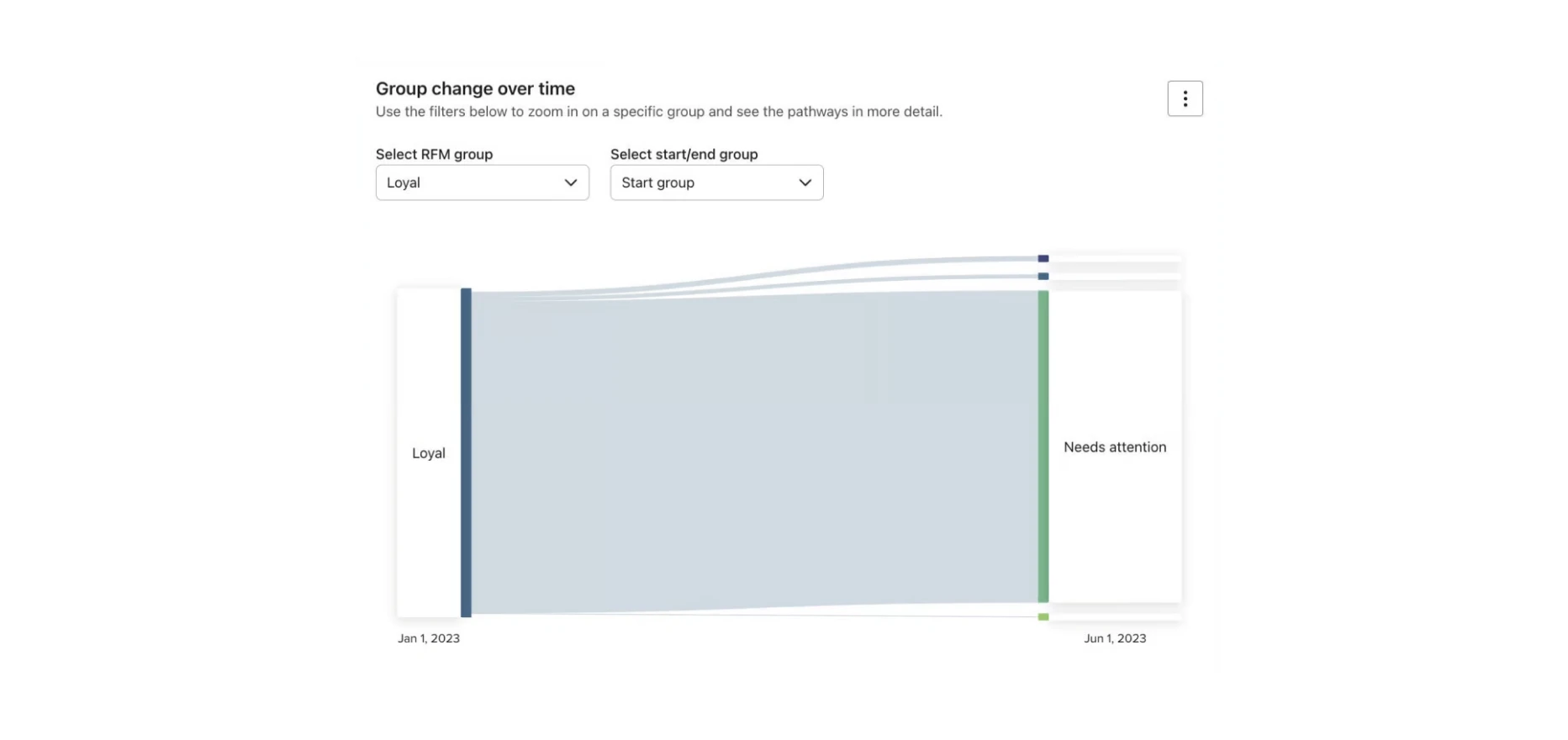
Add a repeat purchase nurture series based on the expected date of the next order, using Klaviyo's predictive analytics.
Build a flow that counts down to the date each individual customer is expected to re-order, triggered by Klaviyo's "Expected Date of Next Order". Then add a filter for "has not been in this flow in the last 180 days" so a customer receives the nurture only once every six months.
Recommendation: offer a discount to prevent churn, but consider a lower one than your regular win-back series. Alternatively, include a personalised product feed built from Catalog Insights and past purchases.
These are only two examples out of many. I hope they've helped you think creatively about what's possible.
If you have an idea and want to know whether it's possible, get in touch with our Klaviyo experts for a no-obligation chat at hello@atlasstudios.agency.
But wait — that's not all. Now that we've covered RFM segments, let's look at another powerful part of Klaviyo Advanced Analytics.
Using Catalog Insights to drive relevant, personalised product offers
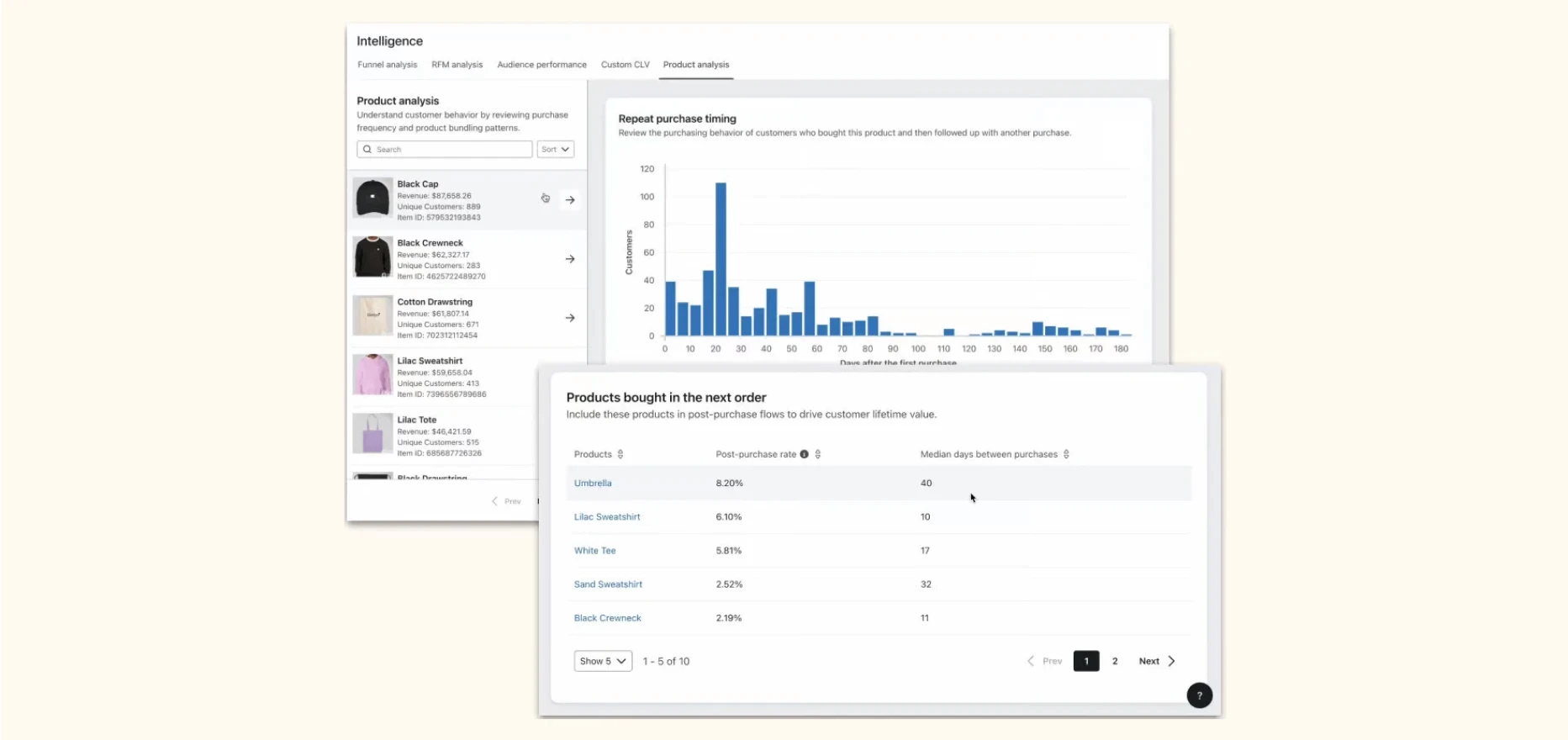
Klaviyo's Catalog Insights lets you examine how customers interact with your best-selling — and worst-selling — products in far more detail.
Take an example. In your product analysis you find that customers most often repurchase 12 days after buying your best-selling dress, and that they're most likely to buy women's active shorts next.
Instead of relying on your standard post-purchase flow, adjust it to reflect the real repurchase timing and cross-promote the active shorts. Or run a one-time campaign for customers likely to buy soon, with a bundle of both items. Or pass the insight to your merchandising team so they can plan around it.
Product analytics can drive repeat purchases and higher AOV while giving customers a better experience.
I haven't forgotten the paid acquisition readers — there's something here for you too.
Using RFM insights to increase return on ad spend
Finding new audiences through purchase-based lookalikes is a reliable way to capture sales. So how about lookalikes built from only your best customers?
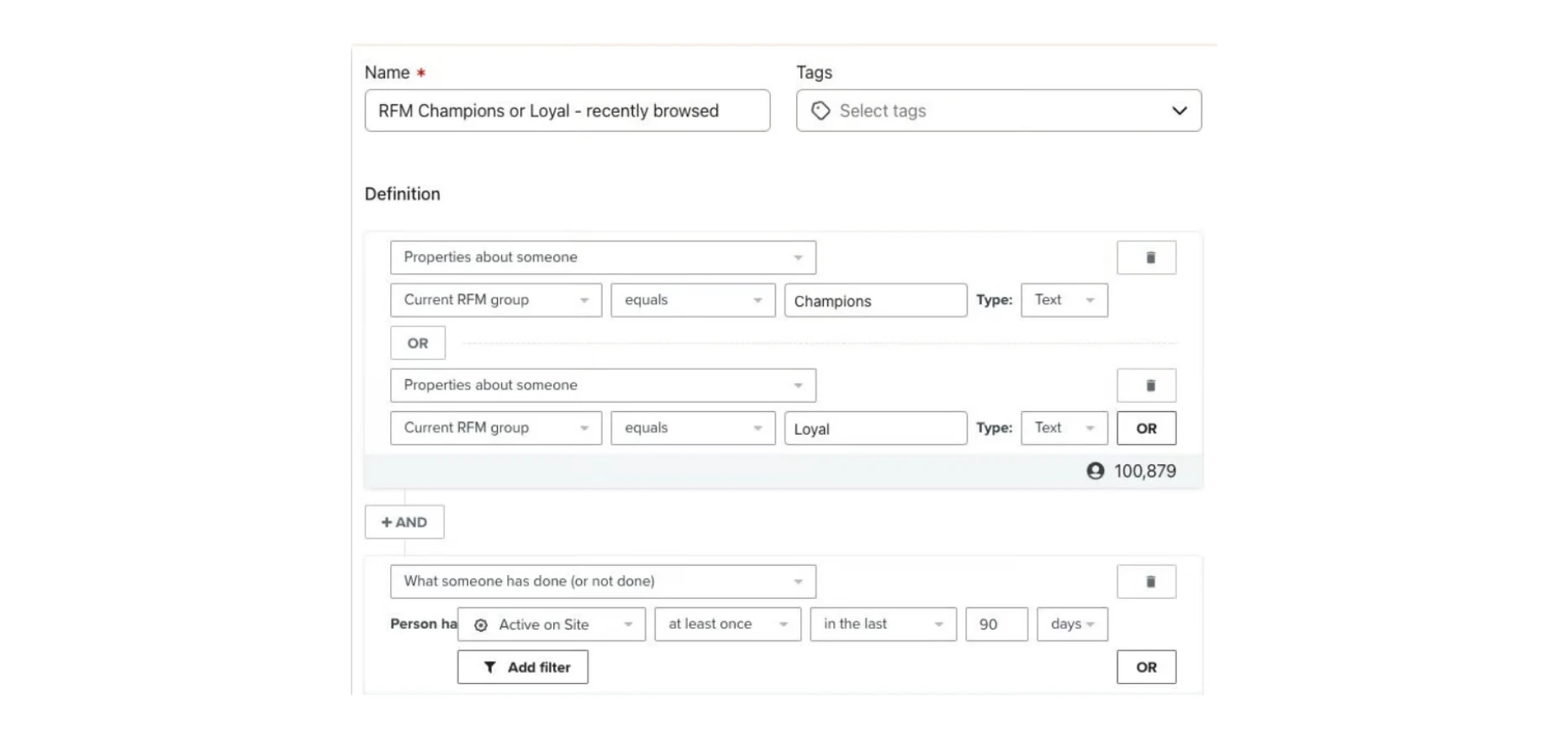
Combine your "Champion" and "Loyal" segments, export them, and send them to Meta and Google to generate lookalike audiences.
Recommendation: don't stop there. Combine RFM groups with recent purchases, channel engagement or browsing behaviour to get more granular. Or layer in demographic data to build hyper-targeted audiences by age, gender and location.
Another example. You've implemented RFM segmentation and recently ran a successful campaign to your "At risk" and "Needs attention" customers.
Those segments are made up of customers who aren't especially engaged but have just purchased through your email campaign, so spending ad dollars on them again this soon isn't the best use of budget.
Consider excluding these audiences from your weekly ad campaigns. Use the median performance chart in RFM analysis to work out roughly when each group is likely to purchase again, then lift the exclusions accordingly.
Understanding your customers and preventing needless churn has never been more critical. Whether you're nurturing at-risk champions, building a genuinely personalised post-purchase flow, or creating hyper-targeted paid acquisition campaigns, the possibilities with Klaviyo Advanced Analytics are vast.
Don't be put off by the number of options — approach it step by step. Build your segments, start analysing, and work block by block.
I hope you've found this useful. As always, if you'd like a no-obligation discovery chat with our team of Klaviyo experts, reach out at hello@atlasstudios.agency.


